Fine Bubble Diffusers, Lagoon Optimization and Aquaculture Support
Aeration is far more than a technical detail; it is a critical process underpinning food safety, product quality and environmental compliance across the entire food supply chain. From wastewater treatment in processing plants to grain storage and aquaculture systems, aeration ensures biological stability, prevents spoilage and supports sustainable operations. At the heart of these systems are industrial blowers and diffuser technologies, which deliver and distribute air efficiently to meet process-specific needs. Reliable aeration blowers provide the airflow required for mixing and oxygen transfer, while fine-bubble diffuser systems maximize oxygen dissolution in water, improving treatment performance and energy efficiency. The economic and environmental stakes are high: Well-designed aeration systems help facilities avoid costly downtime, reduce energy consumption and meet increasingly stringent discharge regulations, all while minimizing the industry’s environmental footprint. As global food demand grows and sustainability pressures intensify, selecting the right combination of aeration blowers, diffusers and controls has become essential for operational resilience and long-term success.
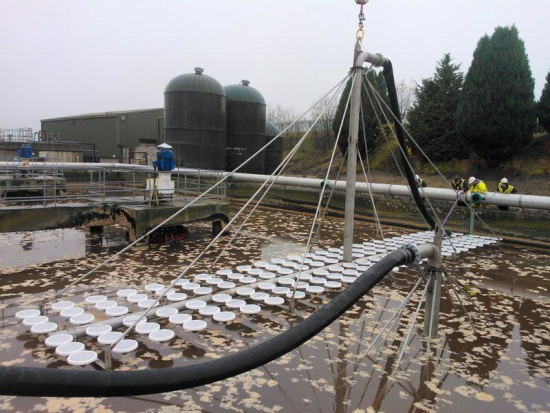
A retrievable diffuser grid in a food processing lagoon.
How Aeration Supports Food Processing Wastewater Treatment
The wastewater produced by food and beverage manufacturers is often much stronger than municipal influent. It contains a wide range of organics, nutrients and suspended solids, and the specific load varies with the products being handled. Potato operations introduce starch that becomes sticky and coats equipment. Meat production adds fats, oils, grease and proteins able to seal diffuser slits. Tomato and fruit processing creates acidic waste streams with pulp and fibers, and beverage facilities contribute sugars, acids, colorants and surfactants promoting foaming and rapid biological growth. Many plants also generate elevated nitrogen and phosphorus levels, along with salts such as sodium chloride, which complicate biological treatment.
These materials are biodegradable, but they create significant oxygen demand and require a stable, well-designed aeration system. Fine bubble diffused aeration is commonly chosen for biological treatment because it releases large numbers of small bubbles, increasing the total surface area for oxygen transfer. These fine bubbles rise more slowly than coarse bubbles, which gives oxygen more time to dissolve into the water. When the diffusers, blowers and control systems are properly matched to the process needs, plants can achieve high treatment efficiency and reduce overall energy consumption.
The type of biological process used can vary, but many food processors rely on activated sludge or sequencing batch reactors (SBRs). SBRs treat wastewater in timed cycles within a single tank, which makes uniform aeration especially important. If air delivery is inconsistent or does not reach the full depth of the basin, both SBRs and conventional activated sludge systems can experience settling issues, odor episodes and reduced treatment performance. Meeting regulatory discharge limits depends heavily on maintaining proper dissolved oxygen levels throughout the cycle.
Membrane Selection and Regulatory Requirements
Membrane selection is also critical. EPDM is widely used in municipal wastewater treatment, but the harsher conditions found in many food-processing plants – including fats, acids, starches, sugars, surfactants and salts – can accelerate fouling and shorten membrane life. Advanced materials such as PEEK provide better resistance to chemical attack and biological buildup, helping maintain airflow and oxygen transfer over longer periods and reducing unplanned maintenance.
These operational factors matter because food processors face strict regulatory requirements. Facilities with full onsite treatment must meet effluent limits for BOD, TSS, nitrogen, phosphorus and other parameters before discharging. Plants only pretreating wastewater before sending it to a municipal system must still meet local limits to avoid surcharges, violations or forced shutdowns. If membranes foul or aeration blowers are forced to operate against increasing backpressure, aeration becomes less effective, and plants risk falling out of compliance.
Wastewater treatment may not be a daily focus for food-processing operators, but interruptions carry real financial consequences. Poor aeration performance can lead to production slowdowns, higher energy costs, additional surcharges from municipalities or even temporary shutdowns. A well-designed aeration system, including the right membrane materials, blower capacity and automated controls helps reduce these risks and keeps treatment reliable.
Beyond conventional treatment systems, many food processors rely on lagoons for their simplicity and cost-effectiveness. Here, aeration remains just as vital for maintaining biological stability and preventing sludge buildup.
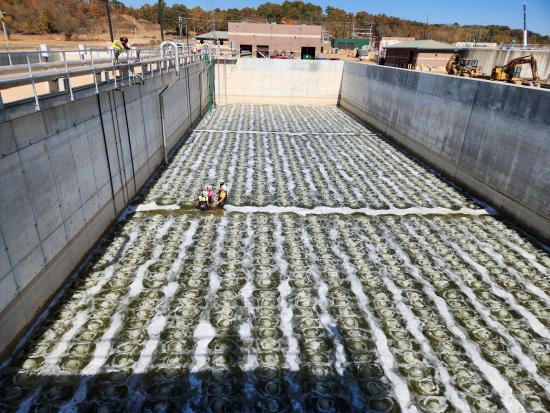
A fine bubble aeration basin at startup.
How Aeration Enhances Lagoon Performance
Lagoon systems remain a widely used treatment method in the food industry because they have fewer mechanical components, are cost-effective and can handle large and variable flows. Many food processors choose lagoons specifically for their long retention times and ability to buffer seasonal or production-related fluctuations that would strain more complex treatment systems. For facilities with adequate space and high hydraulic loads, lagoons offer a practical and reliable approach to managing industrial wastewater.
To perform effectively, however, lagoons depend on a healthy biological community requiring consistent oxygen and mixing. Food-processing wastewater often carries fats, proteins, starches, sugars and salts settling or accumulating more rapidly than municipal waste. Without proper mixing or aeration, solids can accumulate on the bottom, forming sludge layers reducing treatment capacity and creating anaerobic zones. Research on lagoon performance has shown these low-oxygen areas can slow the natural breakdown of pollutants and interfere with pathogen reduction, underscoring the importance of maintaining oxygen throughout the entire lagoon.
Dissolved oxygen is at the core of lagoon treatment, and this is where upgraded aeration systems make a meaningful difference. Fine bubble diffusers can be installed to improve oxygen transfer efficiency across the lagoon, supporting both organic removal and pathogen reduction. Their small, slow-rising bubbles increase contact time and encourage deeper oxygen penetration, which enhances aerobic digestion. When paired with properly sized aeration blowers, fine bubble systems deliver this oxygen efficiently, even in large basins. Modern controls can further optimize performance by adjusting airflow based on loading conditions or dissolved-oxygen demand.
Designing Aeration Blower Systems for Varying Conditions
Sludge accumulation is another operational consideration. Excess solids can obstruct diffuser performance and increase backpressure, forcing aeration blowers to work harder. This raises energy use and can shorten aeration blower life if left unaddressed. Selecting diffuser membranes that resist fouling and designing aeration blower systems with appropriate capacity and turndown helps maintain consistent airflow as conditions change. Automated controls allow plants to monitor dissolved oxygen, pressure and energy consumption so they can address issues early, before they affect treatment performance.
Regulatory compliance is also a key driver. Whether a lagoon provides full onsite treatment or acts as a pretreatment step before sending flow to a municipal system, the effluent must meet specific permit limits for parameters such as BOD, TSS, nutrients and, in some cases, pathogens or fats and oils. Reliable aeration plays a central role in maintaining these levels. When aeration performance declines, facilities may face surcharges, odor complaints or production slowdowns while the lagoon recovers.
When lagoons are equipped with the right aeration and control strategy, they become a dependable and economical way to manage food-processing wastewater. Fine bubble diffusers, properly selected blower systems and responsive controls can significantly improve oxygen transfer, biological stability and overall reliability. This allows food processors to retain the operational simplicity and cost advantages of lagoon treatment while meeting modern regulatory and performance expectations.
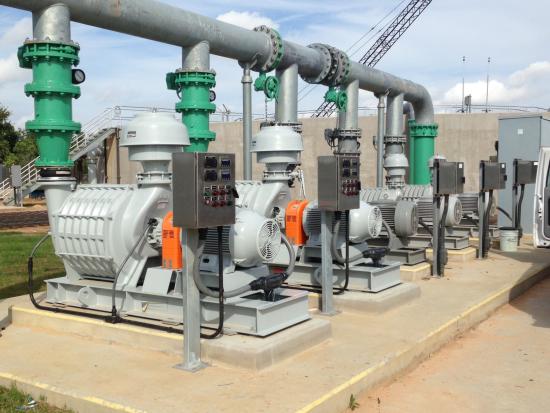
An aeration blower system used by a food processor.
Aeration in Grain Storage and the Role of Blowers
Aeration isn’t limited to water-based processes. In grain storage, controlled airflow plays a different but equally important role, preserving crop quality and preventing spoilage during long-term storage.
Grain storage facilities rely on aeration systems to preserve the quality of corn, wheat, soybeans and other crops. Unlike wastewater treatment, the purpose of aeration in this environment is not oxygen transfer but temperature and moisture control. When grain is stored in large bins or silos, natural respiration and external heat can create warm, humid pockets encouraging mold growth, insect activity and spoilage. Aeration systems prevent these conditions by moving controlled amounts of air through the grain mass.
Before aeration technology was widely available, operators often had to manage grain quality by manually turning or moving the grain within the storage structure. This introduced fresh air and helped reduce hot spots, but required significant labor, created wear on equipment and still did not guarantee uniform cooling. Modern aeration systems replaced this practice by delivering consistent airflow throughout the bin, reducing manual intervention and improving overall product protection.
Most grain aeration systems rely on industrial blowers to push or pull air through perforated floors, ducts or vertical aeration tubes within the bin. Because grain is a dense, tightly packed material, the blower must provide enough static pressure to move air evenly through the entire structure and prevent dead zones where spoilage can occur. Proper airflow maintains uniform temperatures, limits moisture migration and helps keep mold and insects under control.
Temperature Changes in Grain Storage
Aeration blower performance is especially important in climates with large seasonal temperature swings or in facilities storing grain for extended periods. The right aeration blower system allows operators to cool the grain during harvest, maintain stable conditions through winter and manage gradual warming in spring and summer. Automated controls are increasingly common and help optimize airflow based on inside-bin temperatures, ambient conditions and moisture trends.
Although the equipment used in grain aeration differs from the diffused aeration systems applied in wastewater treatment, the engineering principles are similar. Reliable, steady airflow is essential to prevent quality loss, protect stored product and reduce the financial risks associated with spoilage. For facilities handling large storage volumes or multiple bin sites, selecting the appropriate aeration blower size and control strategy plays a major role in maintaining consistent grain quality.
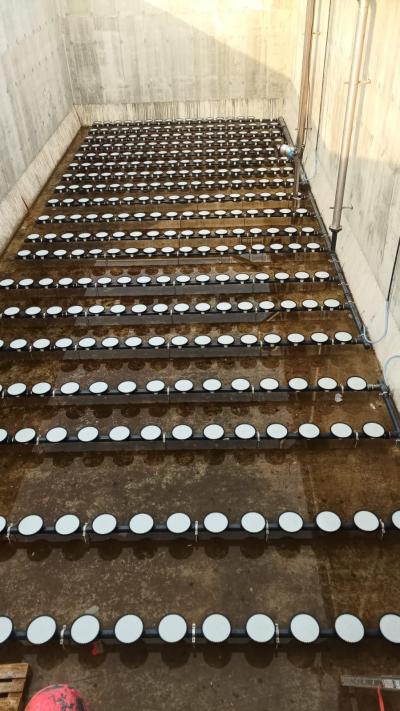
This aeration basin has coated membranes for a longer lifespan and reduced maintenance.
Aeration in Aquaculture: Supporting RAS Performance
Finally, aeration extends to aquaculture, where oxygen delivery supports fish health and biofilter performance in recirculating systems, and even creates protective barriers in open-water farms.
Aquaculture (fish farming) continues to grow as a major contributor to the global food supply, and aeration plays an important role in both land-based and open-water production systems. In recirculating aquaculture systems (RAS), water is continuously filtered and reused, which allows farms to maintain higher stocking densities and more controlled growing environments. To support fish health and the biological processes cleaning the water, these systems depend on a reliable and steady supply of oxygen.
Fine bubble diffusers are often used in RAS because their small, slow-rising bubbles improve oxygen transfer and help maintain stable oxygen levels in the tanks. Adequate oxygen is essential not only for the fish but also for the nitrifying bacteria inside the biofilter, which in many installations is designed as a moving bed biofilm reactor (MBBR). An MBBR uses suspended plastic media to provide a large surface area where beneficial bacteria can grow and break down the ammonia produced by fish and uneaten feed. These bacteria transform ammonia into safer forms, and they rely on continuous oxygen to carry out this work. The performance of the biofilter depends on stable dissolved oxygen levels and selecting media well-suited to the system’s flow and loading conditions.
The Biofilter and Reliable Air Delivery
Because the biofilter is central to water quality, the aeration system and aeration blower capacity must support both fish respiration and biological treatment. Reliable air delivery keeps the media in motion, maintains active biofilm and helps the biofilter respond to changes in biomass or feeding activity. Modern controls allow operators to adjust airflow as conditions change, which helps maintain consistent performance while reducing energy use.
Aeration is also important in marine aquaculture, although it is used differently. Open-water farms, especially salmon operations, increasingly rely on bubble curtains to protect fish from harmful algal blooms, jellyfish and other biological threats carried by tidal currents. Bubble curtains use high-volume aeration blowers to release streams of rising bubbles around the perimeter of net pens. The upward movement of the bubbles helps deflect or dilute incoming water before it reaches the fish. Long-term installations have shown these systems can improve farm resilience and help reduce losses during contamination events.
Whether the goal is maintaining oxygen levels in a recirculating system or creating protective barriers in coastal waters, aeration remains a versatile tool in modern aquaculture. Effective system design brings together the right aeration blower capacity, diffuser or bubble-line configuration and automated controls. These elements work together to ensure reliable, continuous performance, which is essential in an industry where even brief interruptions can affect fish health and overall production.
Conclusion
Across these diverse applications, the common thread is clear: Reliable aeration systems, powered by industrial aeration blowers and diffuser technologies, are essential for efficiency, compliance and sustainability.
Aeration touches nearly every part of the modern food supply chain, from treating high-strength wastewater in processing plants to preserving stored grain and supporting fish health in aquaculture systems. While each application has its own requirements, the foundation remains the same. Successful aeration depends on delivering air reliably, distributing it effectively and designing systems matching the unique characteristics of the process.
In wastewater treatment, fine bubble diffusers, properly selected membranes and well-sized aeration blowers help facilities manage complex waste streams, maintain compliance and avoid costly disruptions. In lagoons, aeration supports a stable biological community and enhances performance in systems many food processors rely on for their simplicity and flexibility. Grain storage facilities depend on steady airflow to protect crop quality, and aquaculture operations use aeration both to maintain controlled environments in recirculating systems and shield open-water farms from external threats.
Across all these environments, the integration of aeration blowers, diffusers, controls and process-specific design is what enables aeration systems to perform consistently. As production demands grow and regulatory expectations rise, selecting the right aeration approach becomes even more important. Thoughtfully engineered aeration solutions give food processors, farmers and aquaculture operators confidence their systems will remain reliable, efficient and capable of supporting long-term operational goals.
About the Authors
|
|
|
|
Bob Kisler |
Doreen Tresca |


Bob Kisler has over 35 years in the aeration blower industry, concentrating on procedures and process improvement. He focuses on variable frequency drives, PLC controls and programming to reach maximum energy savings and process improvement for aeration blower applications. He provides consultations to develop technical solutions, as well as assistance on energy savings with centrifugal blower technologies.
Doreen Tresca is a strategic marketing leader with over 15 years of experience driving growth for B2B brands in the water and wastewater industry. She currently leads global marketing and communications at SSI Aeration, supporting international sales and operations across the municipal and industrial sectors.
About Hoffman & Lamson
Hoffman and Lamson are trusted leaders in centrifugal blower and exhauster technology, with over a century of engineering excellence serving water, wastewater and industrial markets worldwide. As part of Gardner Denver’s Nash Division, it offers a broad range of high-efficiency blower systems – customizable, energy-saving and built for durability across demanding air and gas applications. For more information, visit https://www.hoffmanandlamson.com.
About SSI Aeration
With nearly 30 years of experience, SSI Aeration is a global leader in wastewater treatment technologies, specializing in energy-efficient fine bubble diffusers and MBBR systems. Backed by engineering expertise and worldwide support, SSI delivers reliable, innovative solutions that help facilities operate cleaner and smarter. For more information, visit https://www.ssiaeration.com.
To read similar articles on Food Industry, visit https://www.blowervacuumbestpractices.com/industries/food.
Visit our Webinar Archives to listen to expert presentations on Aeration Blowers at https://www.blowervacuumbestpractices.com/magazine/webinars.