Food

By Bob Kisler, Regional Sales Manager, Hoffman & Lamson, and Doreen Tresca, Marketing Manager, SSI Aeration

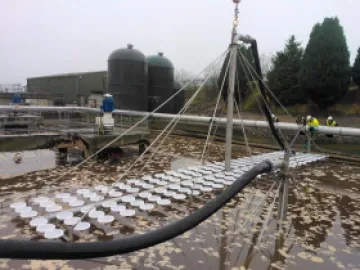
From managing complex wastewater streams to protecting stored grain and sustaining fish health, effective airflow is essential to maintaining product quality and operational stability. How advances in blower technology, diffuser materials and automated controls are helping facilities improve efficiency, reduce energy use and meet increasingly strict environmental requirements.

Wolf Nudeln Reduces Water Use with Claw Vacuum Pumps

By Lisa Glatt, Head of Marketing, Busch Austria

By replacing liquid ring and compressed air systems with centralized rotary claw vacuum pumps, Austrian pasta manufacturer Wolf Nudeln significantly reduced water consumption, maintenance requirements and operating costs. This case study demonstrates how modern vacuum technology improves efficiency, reliability and product quality in food manufacturing while supporting long-term sustainability goals.

The ROI of Proper Filtration

By Bella Alfaro, Marketing Coordinator, and Rich Ricciardi, Market Manager, Solberg Manufacturing

This article examines how industrial facilities can quantify the return on investment associated with disciplined filter change scheduling. By connecting pressure drop, energy consumption, maintenance costs and equipment longevity, facilities can move from reactive maintenance to measurable operational control.

APG-Neuros Aeration Blowers Treat Industrial Wastewater

By Troy Dreier, Senior Editor, Blower & Vacuum Best Practices

Different industries have differing levels of toxins and contaminants that need to be reduced before wastewater can be discharged. The company specializes in understanding those requirements and creating custom turbo blowers to customer specifications. Its leading industries are pulp and paper, poultry and food and beverage.

Vacuum Generators and Pneumatics Power Robotics at Automate 2025

By Troy Dreier, Senior Editor,  Blower & Vacuum Best Practices Magazine

Automate 2025, showed attendees how to make their industrial plants more efficient with robotics. Throughout the conference, robotic arms shuttled packages, burgers and even macarons with speed and accuracy. Driving this new technology was a complex network of pneumatic cylinders and pick-and-place automation powered by pneumatic vacuum generation. Innovation makes these proven technologies more efficient than ever.

Freeze Drying and the Sublimation of Ice Water

By Bryan Jensen, Engineered System Solutions Manager, Rogers Machinery Company

The phrase pairing the two words freeze and dry is one of the more straightforward and clear descriptions of a process in industry. To freeze dry a blueberry, an ice cream sandwich, the latest-greatest-pharmaceutical or a formaldehyde-infused complex carbon chain; one must first freeze the liquid water (or other liquid compound) into solid ice that is integrally bound within the food or other moist substance.

Hygienic Vacuum Packaging for Cheese

By Busch Vacuum Solutions

Vacuum and protective gas both reduce the activity of oxygen-dependent microorganisms inside the packaging. This way, vacuum-packaged foodstuffs have a longer shelf life, even without preservatives. There are different types of vacuum packaging. When it comes to cheese, the type of vacuum packaging depends heavily on the specific type of cheese.

Fresh Food and Clay Extrusion Vacuum System Case Studies

By Uli Merkle, Busch Vacuum Solutions

Vacuuming fresh food using chamber machines is often a daily activity in butcher shops, at fresh food counters for meat, sausage, and cheese products, as well as in the foodservice industry. All fresh foods contain more or less unbound water, which partially evaporates during vacuum packaging. This can influence the quality of the product. Furthermore, if the packaging machine is not permanently in operation, the packaging result may deteriorate, or the packaging process may take too long.

The 2022 International Production & Processing Expo

By Roderick Smith, Compressed Air Best Practices® Magazine

The 2022 International Production & Processing Expo (IPPE), was held January 25-27, 2022 in Atlanta with more than 500,000 square feet of exhibit space and 1,140-plus exhibitors. Attendee numbers had not been released when this was written. Sponsored by the U.S. Poultry & Egg Association, American Feed Industry Association and the North American Meat Institute, IPPE is the world's largest annual poultry, meat and animal food industry event of its kind.

Two Vacuum System Optimization Case Studies from Europe

By Uli Merkel, Busch Vacuum Solutions

By using state-of-the-art vacuum technology for degassing mineral water, it has been possible to save an average of 3,000 cubic meters of water per filling plant per year. The solution was to replace the existing liquid ring vacuum pumps with MINK claw vacuum pumps from Busch Vacuum Solutions.

Tea Packaging Quality Improved with Vacuum Conveying Upgrades

By Nora Ashmen, VAC-U-MAX

In an ongoing project to improve processes whenever and wherever it can, a global manufacturer of private label retail, food service and specialty brand teas, purchased an extension conveyor system to improve efficiency and ergonomics. Prior to implementing the extension conveyor, a vacuum conveyor system transferred raw materials into portable silos that workers rolled from one production machine to the next.

Liquid Ring Vacuum Pumps and Food Applications

By Tie Duan, E.W. Klein & Co.

The food industries can have many messy processes, whether it is poultry evisceration, deboned waste conveying, bottling, or sugar cake filtration. Liquid ring vacuum pumps (LRVP’s) are often utilized as the backbone of these processes because they can handle the soft solids, debris, and particles that can easily get sucked into the vacuum pump. So how does a LRVP work, why does it work in these processes, and how to make sure they keep working?

Improved Vacuum Supply Conserves Energy at Meat Processing Operations

By Uli Merkle, Busch Vacuum Pumps and Systems

The right vacuum solution not only ensures product quality in meat processing operations; it also helps companies achieve important sustainability goals. Such is the case at two leading meat processing companies in Germany, both of whom added Busch Vacuum Pumps and Systems solutions to their operations and saved energy and more as a result.

Pneumatic Conveying Helps Pharmaceutical Ingredients and Excipients Manufacturer Safely and Efficiently Meet Demand

By Doan Pendleton, VAC-U-MAX

A major challenge our customers face is the way bulk materials are supplied to the market. We needed a material handling system that would keep up with our demand, ensure worker safety and limit manual manipulation of material. The VAC-U-MAX team designed and manufactured a material handling system capable of conveying over four and half million pounds of powders per year that now allows us to continually meet our growing business.

Engineered Vacuum Solution Saves Oregon Brewer 5,000 Gallons of Water Per Day

By Atlas Copco Vacuum

When Craft Brew Alliance (CBA) set a goal to dramatically reduce water consumption at its Widmer Brothers Brewery in Portland, Oregon, it focused its efforts on its bottling process – and implemented a solution engineered by Atlas Copco that saves 5,000 gallons of water per day. In addition, it saves the craft brewer $39,000 per year, thanks to the elimination of water treatment costs and reduced energy use.

Delivering Oil-free, Low-Pressure Air in Food and Beverage Applications

By Mike Grennier, Blower & Vacuum Best Practices Magazine

Blower & Vacuum Best Practices interviewed Deepak Vetal, National Sales Manager, Blowers and Low-Pressure Compressors, Atlas Copco Compressors, LLC. To put it in perspective, the food and beverage industry accounted for 12 percent of the U.S. gross domestic product in 2017. The main subsegments that use low-pressure air for numerous applications in this industry include meat processing, poultry, dairy product manufacturing, preserved fruits and vegetables, as well as brewing and beverage processes.

Central Vacuum Supply for Efficient Cheese Packaging

By Uli Merkle, Busch Dienste GmbH

DMK Deutsches Milchkontor GmbH produces sliced cheese and Mozzarella at its production facility in Georgsmarienhütte, Germany. The various types of sliced cheese and Mozzarella blocks are vacuum packed after processing in several packaging lines. The vacuum supply for the packaging machines is provided by a Busch centralized vacuum system, which supplies both the packaging lines and the thermoforming machines.

Republic Manufacturing Delivers Food Grade Blower & Air Knife Systems

By Blower & Vacuum Best Practices Magazine

Blower & Vacuum Best Practices interviewed Republic Manufacturing VP of Sales & Marketing, Rich Leong. Our line of regenerative blowers, also known as side channel blowers, are for vacuum or compressed air applications in both horizontal and vertical mounted positions. Airflow capabilities range from 50 to 776 CFM, vacuum capabilities from 47" to 236" of water (1.7 psi to 8.53 psi) and pressure capabilities up from 47" to 307" of water (1.7 psi to 11.09). TEFC electric motors are cUL and CE certified and come in single and three-phase, dual frequency and multi-voltage versions for worldwide applications. Horsepower ranges from 1/2 to 40 HP (from 0.4 to 30kW).

Suttero Bazenheid Advances Meat Processing to Energy-Efficient Centralized Vacuum System

By Uli Merkle, Busch Vacuum Pumps and Systems

Energy for the entire Ernst Sutter AG company – and consequently the Suttero Bazenheid premises as well – is generated via hydropower. In addition, around 75% of the energy from refrigeration is also used to generate hot water. When creating vacuum for packaging, Suttero Bazenheid relies on a centralized vacuum system from Busch. This is significantly more energy-efficient in operation than decentralized vacuum supplies on individual packaging machines. As a result, Ernst Sutter AG has created a production plant that corresponds to the latest standards, both from a technical and ecological perspective.

Darigold Utilizes Vacuum in Cheese Processing

By Blower & Vacuum Best Practices® Magazine

Blower & Vacuum Best Practices interviewed Darigold’s Sunnyside Plant’s Technical Manager, Tom Rouleau. Today, we manage one of the largest dairy co-ops in the United States. Our dairy farms and plants are truly awe-inspiring and efficient facilities. Our butter is made by one of America's only European-style vacuum churns, which makes butter with fewer air bubbles. Having the latest technology also helps Darigold produce less waste, fuel consumption and lower environmental impact.

Rotary Screw Vacuum Pumps Benefit Meat Packaging Plants

By Jerry Geenen, Atlas Copco Industrial Vacuum Division

Meat packaging plants have long used vacuum pumps as a way to remove air and reduce the amount of oxygen in their products’ plastic packaging. Vacuum packaging extends the meat’s shelf life while protecting its flavor and exposure to outside elements, such as freezer burn and bacteria.

The Importance of Particle Velocity in Dilute Phase Pneumatic Conveying

By Hank van Ormer, Van Ormer Consulting

In open end pipe line suspension flow, or dilute phase pneumatic conveying, proper particle velocity is critical to continuing productivity and product quality. Until recently, measurement of actual particle velocity within the pipe has not been practical outside the laboratory. The plant operating personnel depend on a much less accurate metric - estimating the conveying air velocity in the pipe and relating that to particle velocity.

Vacuum Cooling Reduces Waste in Postharvest Cold Chain Systems

By Ryoshin Imai, ULVAC Technologies, Inc.

During the summer season, vegetables tend to deteriorate quickly once harvested from the field—or during postharvest stage of the cold chain. In traditional cold chain systems, vegetables are put into a chilled cooler for preservation, a process that requires approximately 12 hours for the product to achieve proper temperature. In some instances, as much as 25 percent of food product in the chilled cooler will decay before arriving at a proper storage area. Fortunately, there is a process for improving the effectiveness of the postharvest stage—vacuum cooling.

MD-Kinney Optimizes Vacuum and Blower Systems in Food Plants

By Blower & Vacuum Best Practices Magazine

Vacuum and blower systems are commonplace in food manufacturing facilities. Bakeries, flour mills, breweries, and dairy plants are just a few of the many sites where vacuum pumps and blowers are used. While these facilities may leverage both types of systems, vacuum pumps are more commonly used when processing meats, fish and poultry. Other common vacuum applications include maple sap extraction, confection, vacuum coating, and juice distillation.

Adopting PillAerator High-Speed Turbo Blowers for Yeast Fermentation

By Glenn Schultz, PillAerator

Yeast fermentation is a vital process in the production of many food and beverage products. It is a common application within breweries, bakeries, and wineries, along with other facilities where biogas and ethanol are produced. In these facilities, fermentation tanks filled with a reaction liquid are often supplied with air from blowers. Recently, there has been a trend in the adoption of high-speed turbo blowers for yeast fermentation applications, as the blower technology can yield large energy savings if properly installed and controlled.