System Assessments

Edited by Troy Dreier, Senior Editor, Blower & Vacuum Best Practices Magazine

As the Best Practices Magazines celebrate their twentieth anniversary, we wanted to take a moment to reflect on the remarkable system efficiency gains achieved since our first issue. We also wanted to give subscribers a peek at what the next decades might bring. To do this, we asked a hand-selected list of original equipment manufacturers, independent compressed air system sales and service companies, manufacturing plants and independent system auditors to share their thoughts, highlighting the changes they’ve seen over the past 20 years, then predicting what the next 20 years will bring.

Thought Leaders on System Optimization Past & Future

Edited by Troy Dreier, Senior Editor, Blower & Vacuum Best Practices Magazine

As the Best Practices Magazines celebrate their twentieth anniversary, we wanted to take a moment to reflect on the remarkable system efficiency gains achieved since our first issue. We also wanted to give subscribers a peek at what the next decades might bring. To do this, we asked a hand-selected list of original equipment manufacturers, independent compressed air system sales and service companies, manufacturing plants and independent system auditors to share their thoughts, highlighting the changes they’ve seen over the past 20 years, then predicting what the next 20 years will bring.

Zorn Compressor Vacuum Audit at Midland Plastics

By Troy Dreier, Senior Editor, Blower & Vacuum Best Practices

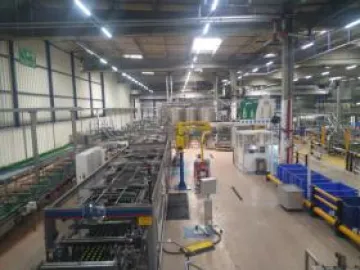
The 105,000-square-foot Midland Plastics plant in New Berlin, WI, employs 100 people and manufactures a variety of custom plastic materials, including dashboard and door panels for the automotive industry, created with thermoforming. The plant has three thermoforming machines that operate nearly around the clock. Plastic comes in large sheets, which the plant heats and vacuums into a mold.

APG-Neuros Aeration Blowers Treat Industrial Wastewater

By Troy Dreier, Senior Editor, Blower & Vacuum Best Practices

Different industries have differing levels of toxins and contaminants that need to be reduced before wastewater can be discharged. The company specializes in understanding those requirements and creating custom turbo blowers to customer specifications. Its leading industries are pulp and paper, poultry and food and beverage.

Dual Point Aeration Blower Control

By Tom Jenkins, President, JenTech Inc.; Jun Inai, Senior Design and Project Engineer, and Hayato Sakamoto, Principal Project Leader, Kawasaki Heavy Industries

Historically, the most common dual point control has been combining inlet guide vanes and variable discharge diffuser vanes. These are both mechanical systems and predate the availability of economical variable speed control. Recent advances in power electronics technology and improved VFD economics have led to implementing other combinations for dual point control. These include combining VFD control with either VDVs or IGVs.

Advanced Aeration Control for Blowers

By Tom Jenkins, President, JenTech Inc.

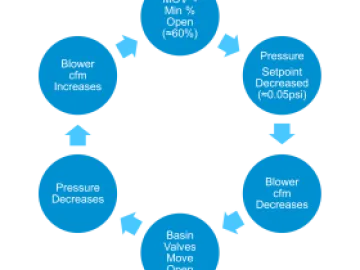
The ideal blower control matches the blower airflow to the process demand. The process demand, in turn, must be established by the aeration control system. This control strategy has become standard practice in most treatment facilities because of its proven effectiveness in reducing energy consumption and improving process stability.

Centralized vs. Point of Use Vacuum Filtration

By Jamie Stebbins, Solberg Manufacturing

In this article, we will isolate and review one system common to many plants and industries: the vacuum system. Within this system, we will further drill down to the filtration required to maintain a healthy process, which contributes directly to the bottom line. The vacuum system does not exist in many production process lines without filtration. Throughput and quality of the end product are closely tied to the necessary vacuum levels achieved when filtration is properly deployed.

7 Best Practices for Leak Detection in Vacuum Systems

By Sinja W. Stentoft, Editor Communications, Busch Vacuum Solutions

Leaks in vacuum systems can cause considerable damage to sensitive industrial processes. The vacuum pump’s ability to generate and maintain the desired vacuum level is compromised as the process gas escapes the pump or contaminants – such as air, dust and debris – enter. This leads to accelerated wear and tear of internal components such as seals and gaskets, and the vacuum pump may fail or require more frequent servicing. As a result, energy bills and overall operating costs increase drastically, while output quality suffers.

pdblowers Soars in Aerospace Vacuum System Installation

By Blower & Vacuum Best Practices Magazine

The aerospace division of a large industrial manufacturer, uses a large altitude simulation chamber to test aircraft parts at different atmospheric conditions. It was based on this application, that the pdblowers team created what the facility needed: a multi-stage vacuum system that could manage varying mass flows at different vacuum levels.

Inovair Aeration Blowers Pass the Test at Colorado WWTP

By Troy Dreier, Blower & Vacuum Best Practices Magazine

The wastewater treatment plant for the City of Lafayette, Colorado, is a Class B biosolids facility. It meets grid regulations for volatiles reduction with at least a 38% reduction, and has a solids retention time (SRT) of at least 15 days at 95°F (35°C). Class B biosolids can be used as fertilizer for livestock feed and other applications that don’t directly lead to food for human consumption.

Six Summer Maintenance Tips for Your Vacuum Pump

By Busch Vacuum Solutions

By following these summer-specific maintenance tips, you can help extend the lifespan of your vacuum pump, improve its performance and reduce the risk of costly repairs or replacements. Regular maintenance during the hot months not only keeps your equipment running smoothly, but also ensures it operates safely and efficiently under challenging conditions.

Calculating Aeration Piping Friction Loss

By Tom Jenkins, JenTech Inc.

In order to properly identify the performance requirements of a blower it is necessary to identify the inlet and discharge pressures. The friction losses in the inlet and discharge piping must be calculated to determine the total pressure requirement. This article details a simplified procedure for calculating piping losses.

Vacuum Receivers: Full of Vacuum or Full of Myth?

By Jackson Redline, Engineered System Solutions Project Manager, Rogers Machinery

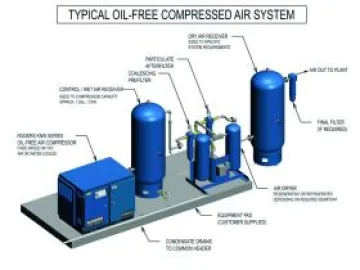
In this article, we’ll discuss some of the uses for receiver tanks for positive pressure systems where the pressure inside the system is greater than atmospheric pressure, and the uses, or lack thereof of, receiver tanks in vacuum systems where the system pressure is less than atmospheric pressure.

VFDs Improve Multistage Blower Performance

By Tom Jenkins, JenTech and Lee Pinkerton, Metropolitan Council Environmental Services

Many designers and operators believe that multistage centrifugal blowers are not suitable for variable speed control. They also feel that multistage centrifugal blowers are an inefficient option for wastewater aeration. Implementing VFD control of their aeration blowers allowed the plant to improve energy efficiency. The reduction in energy expense paid for the system upgrade in less than two years.

When to Repair vs. Replace Your Vacuum Pump: A Guide

By Mary MacGregor Velhinho, Busch Vacuum Solutions

If your vacuum pump is malfunctioning, you are faced with a choice: repair or replacement. Our guide will take you through both options and provide recommendations on when it makes sense to repair vacuum pumps and when to replace them. We will also take a look at how to spot and diagnose common issues before they lead to system failure. Whatever the path of action, the decision to repair or replace always begins with testing and diagnosis. A factory-trained service technician who specializes in vacuum pump services inspects the equipment and identifies the problem.

The Future of Vacuum Automation for AMRs and AGVs

By Markus Schmider, Industry Segment and Key Account Manager Robotics & Composites, Schmalz

Autonomous Mobile Robots and Automated Guided Vehicles can automate receiving and unloading, picking, stacking, storing and even inventory management. However, there are challenges to powering these vehicles and their attachments. Because they are smaller and lighter, the size of components and the power they need to operate matters. Most AMRs and AGVs are battery operated, so it’s important to balance the need for high efficiency with also providing high levels of torque.

Six Steps to a Tailor-Made Vacuum Solution

By Fabian Falbusch, Head of Content Marketing, Busch Vacuum Solutions

Building a vacuum system solution is always a joint undertaking. Each solution aims to be compliant with location regulations, as well as to be reliable, energy-saving, sustainable and economical. An essential part of the process is including the customer and their requests during the planning process. There are six steps to find the optimum vacuum solution for the respective application.

Design Tips for Aeration Blower Rooms

By Tom Jenkins, JenTech Inc.

Supplying air to process equipment necessitates a system approach. Selecting the blowers is a critical design step, but far from the final one. The layout of the blower room and ancillary equipment is just as critical to project success as the blowers themselves.

Hygienic Vacuum Packaging for Cheese

By Busch Vacuum Solutions

Vacuum and protective gas both reduce the activity of oxygen-dependent microorganisms inside the packaging. This way, vacuum-packaged foodstuffs have a longer shelf life, even without preservatives. There are different types of vacuum packaging. When it comes to cheese, the type of vacuum packaging depends heavily on the specific type of cheese.

Boosting Process Vacuum Performance at a High-Tech Electronics Plant

By Bryan Jensen, Corporate Projects Manager, Rogers Machinery Company

Electronics applications typically run their tooling requiring Process Vacuum based on differential pressure from barometric; that is, they control their PVAC pumps to “Inches of Mercury Vacuum”. This is because the parts and pieces being manipulated by vacuum are of certain sizes, shapes, and weights. If the differential pressure across the part is not great enough, then the tooling will fail and result in a loss of product, adverse impact to quality, and production downtime.

New Vacuum Solution Ensures Safe & Sustainable Tires at Continental

By Busch Vacuum Solutions

The new solution also saves close to 90 percent of the annual maintenance costs. The side channel blowers required intensive repairs and were therefore a source of high costs. MINK MV claw vacuum pumps provide completely dry compression of intake air and thus work without operating fluids such as oil or water. This makes the vacuum pumps virtually maintenance-free.

Vacuum Upgrades Improve Operations at SupremeX

By Ron Marshall, Marshall Compressed Air Consulting

SupremeX, a Canadian based envelope and packaging manufacturer, with 11 facilities across six provinces, as well as five facilities in the United States, recently upgraded the vacuum system in their Winnipeg based plant. This article discusses the system before and after the changes, and the significant energy savings, plus improved system reliability that resulted. The company also captured a significant utility incentive to help with the cost of a new cutting-edge variable speed vacuum pump.

Measuring Blower Airflow Rates with Calibrated Ammeters

By Tom Jenkins, JenTech Inc.

One definition of “calibrate” is “to determine, rectify, or mark the graduations of something”. An ammeter is an instrument for measuring electric current. Therefore the simple definition of a calibrated ammeter is a current measuring device marked with units of measure, presumably amperes. In the blower industry, however, the term has developed a specific meaning. A calibrated ammeter is an instrument that measures a blower motor’s current draw and converts the measurement to a display of blower airflow rate.

Fresh Food and Clay Extrusion Vacuum System Case Studies

By Uli Merkle, Busch Vacuum Solutions

Vacuuming fresh food using chamber machines is often a daily activity in butcher shops, at fresh food counters for meat, sausage, and cheese products, as well as in the foodservice industry. All fresh foods contain more or less unbound water, which partially evaporates during vacuum packaging. This can influence the quality of the product. Furthermore, if the packaging machine is not permanently in operation, the packaging result may deteriorate, or the packaging process may take too long.

Vacuum Pumps for Pneumatic Suction Conveying

By Uli Merkel, Busch Vacuum Solutions

Nowadays, pneumatic suction conveying is an important technology for feeding bulk goods gently through piping systems to the various process steps. In the area of food processing, the pharmaceutical and chemical industry and for material feed in plastics processing, suction conveying is indispensable when powder or granular materials have to be transported. The proper choice of the vacuum generator essentially determines the operating costs of a pneumatic conveying system.

Centralized Vacuum System Evaluations: Part 2 Audit Measures

By Hank van Ormer, APenergy

Operating the vacuum system at higher levels (then necessary) affects the needed volumetric flow to compensate for leaks. This required compensation of volume (ACFM) must be added to the nominal production flow demand. The ambient air leak into the system will expand to the highest vacuum level, which is known as the “Expansion Ratio.”

Blow-off Air

Blower Controls

Conveying

Pressure/Vacuum

Vacuum Controls