Industries

By Lisa Glatt, Head of Marketing, Busch Austria

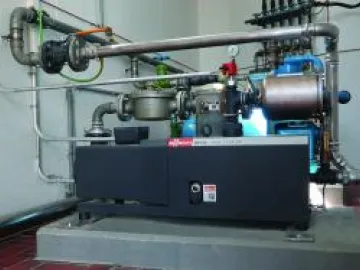
By replacing liquid ring and compressed air systems with centralized rotary claw vacuum pumps, Austrian pasta manufacturer Wolf Nudeln significantly reduced water consumption, maintenance requirements and operating costs. This case study demonstrates how modern vacuum technology improves efficiency, reliability and product quality in food manufacturing while supporting long-term sustainability goals.

Understanding Positive Displacement and Centrifugal Blowers

By Tom Jenkins

Learn the key differences between positive displacement (PD) and centrifugal blowers and how advances in blower technology, variable-speed controls and lifecycle cost analysis are reshaping equipment selection. This article explains blower operating principles, performance characteristics and application considerations to help engineers optimize energy efficiency, reliability and long-term operating costs in wastewater, industrial and process air systems.

Wolf Nudeln Reduces Water Use with Claw Vacuum Pumps

By Lisa Glatt, Head of Marketing, Busch Austria

By replacing liquid ring and compressed air systems with centralized rotary claw vacuum pumps, Austrian pasta manufacturer Wolf Nudeln significantly reduced water consumption, maintenance requirements and operating costs. This case study demonstrates how modern vacuum technology improves efficiency, reliability and product quality in food manufacturing while supporting long-term sustainability goals.

The ROI of Proper Filtration

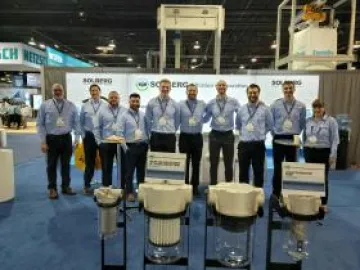
By Bella Alfaro, Marketing Coordinator, and Rich Ricciardi, Market Manager, Solberg Manufacturing

This article examines how industrial facilities can quantify the return on investment associated with disciplined filter change scheduling. By connecting pressure drop, energy consumption, maintenance costs and equipment longevity, facilities can move from reactive maintenance to measurable operational control.

East Peoria WWTP Modernizes Aeration System

By Troy Dreier, Senior Editor, Blower & Vacuum Best Practices Magazine

In 2019, the City of East Peoria, IL, began a comprehensive modernization of its wastewater infrastructure, including a $68 million upgrade covering two operating facilities, Wastewater Treatment Plant No. 1 and Wastewater Treatment Plant No. 3. The project addressed aging equipment, regulatory pressure and the need for improved process control.

Aeration Blowers in the Food Industry

By Bob Kisler, Regional Sales Manager, Hoffman & Lamson, and Doreen Tresca, Marketing Manager, SSI Aeration

From managing complex wastewater streams to protecting stored grain and sustaining fish health, effective airflow is essential to maintaining product quality and operational stability. How advances in blower technology, diffuser materials and automated controls are helping facilities improve efficiency, reduce energy use and meet increasingly strict environmental requirements.

GlobalVac & Air Upgrades the Dalton Cardiovascular Research Center

By Troy Dreier, Senior Editor, Blower & Vacuum Best Practices Magazine

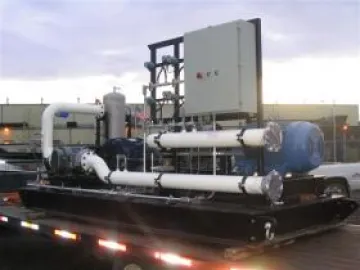
An aging 103 acfm oil-free rotary claw vacuum system was replaced with a skid-mounted duplex configuration featuring two 5.4 hp pumps, automated lead/lag controls and an inlet purge system to handle increased laboratory demand and prevent chemical contamination. The upgraded system delivers up to 106 acfm and 28”Hg, providing higher vacuum capacity, redundancy and improved operational stability within a constrained mechanical room footprint.

Zorn Compressor Vacuum Audit at Midland Plastics

By Troy Dreier, Senior Editor, Blower & Vacuum Best Practices

The 105,000-square-foot Midland Plastics plant in New Berlin, WI, employs 100 people and manufactures a variety of custom plastic materials, including dashboard and door panels for the automotive industry, created with thermoforming. The plant has three thermoforming machines that operate nearly around the clock. Plastic comes in large sheets, which the plant heats and vacuums into a mold.

APG-Neuros Aeration Blowers Treat Industrial Wastewater

By Troy Dreier, Senior Editor, Blower & Vacuum Best Practices

Different industries have differing levels of toxins and contaminants that need to be reduced before wastewater can be discharged. The company specializes in understanding those requirements and creating custom turbo blowers to customer specifications. Its leading industries are pulp and paper, poultry and food and beverage.

What Is Most-Open-Valve Aeration Blower Control?

By Bob Kisler, Regional Sales Manager, Hoffman & Lamson, and Doreen Tresca, Marketing Manager, SSI Aeration

Most-Open-Valve (MOV) control is a common automatic dissolved oxygen (DO) control system. By reducing the required aeration blower discharge pressure, MOV can improve basin efficiency and reduce power requirements if the MOV and aeration blower controls are properly coordinated.

Blow-off Savings at an Aluminum Casting Plant

By Alper Alten, Founder, AAPM Project Management and Consulting

This article explores how a focused engineering intervention driven by data and a clear understanding of process requirements led to a transformative change on a aluminum production plant. By switching from traditional compressed air systems to low-pressure industrial blowers the plant not only maintained product quality, but also achieved a dramatic reduction in energy use saving nearly $455,000 annually.

Vacuum Generators and Pneumatics Power Robotics at Automate 2025

By Troy Dreier, Senior Editor,  Blower & Vacuum Best Practices Magazine

Automate 2025, showed attendees how to make their industrial plants more efficient with robotics. Throughout the conference, robotic arms shuttled packages, burgers and even macarons with speed and accuracy. Driving this new technology was a complex network of pneumatic cylinders and pick-and-place automation powered by pneumatic vacuum generation. Innovation makes these proven technologies more efficient than ever.

Optimizing Wastewater Treatment with a High-Performance Aeration Blower System

By Sam Gooldy, Senior Manager, Marketing and Product Development, UCA

In a strategic move to enhance environmental sustainability and operational efficiency, Universal Compressed Air (UCA) partnered with a leading waste services provider in the Southeast to design, build, own, operate and maintain a state-of-the-art blower System for wastewater pond aeration. This innovative solution, part of a five-year agreement, delivers over 20,000 scfm of low-pressure air while guaranteeing uptime, performance and significant cost savings.

Advanced Aeration Control for Blowers

By Tom Jenkins, President, JenTech Inc.

The ideal blower control matches the blower airflow to the process demand. The process demand, in turn, must be established by the aeration control system. This control strategy has become standard practice in most treatment facilities because of its proven effectiveness in reducing energy consumption and improving process stability.

Inovair Aeration Blowers Pass the Test at Colorado WWTP

By Troy Dreier, Blower & Vacuum Best Practices Magazine

The wastewater treatment plant for the City of Lafayette, Colorado, is a Class B biosolids facility. It meets grid regulations for volatiles reduction with at least a 38% reduction, and has a solids retention time (SRT) of at least 15 days at 95°F (35°C). Class B biosolids can be used as fertilizer for livestock feed and other applications that don’t directly lead to food for human consumption.

Freeze Drying and the Sublimation of Ice Water

By Bryan Jensen, Engineered System Solutions Manager, Rogers Machinery Company

The phrase pairing the two words freeze and dry is one of the more straightforward and clear descriptions of a process in industry. To freeze dry a blueberry, an ice cream sandwich, the latest-greatest-pharmaceutical or a formaldehyde-infused complex carbon chain; one must first freeze the liquid water (or other liquid compound) into solid ice that is integrally bound within the food or other moist substance.

VFDs Improve Multistage Blower Performance

By Tom Jenkins, JenTech and Lee Pinkerton, Metropolitan Council Environmental Services

Many designers and operators believe that multistage centrifugal blowers are not suitable for variable speed control. They also feel that multistage centrifugal blowers are an inefficient option for wastewater aeration. Implementing VFD control of their aeration blowers allowed the plant to improve energy efficiency. The reduction in energy expense paid for the system upgrade in less than two years.

PD Blower Package Reliability

By Tom Jenkins, President, JenTech 

High levels of reliability can be achieved in two ways. First, by design – employing quality materials, proven components, and simplified mechanisms. Second, by incorporating advanced monitoring techniques that identify abnormal operating conditions, provide notification to operators, and initiate equipment shutdown before catastrophic failure occurs. Modern positive displacement (PD) blower packages use both techniques to improve system reliability.

U.K. Wastewater Treatment Plant Blows Away Inefficiency

By Sulzer

Derby Sewage Treatment Works handles wastewater for a population of 440,000, processing an average of 1’000 liters and a maximum 2,300 liters of effluent every second. After water has passed the inlet and mechanical screens, it gravitates into the primary settlement tanks, where solids settle as sludge at the bottom. The sludge is drawn off and anaerobically digested to produce renewable fuel, but liquid flows onto the activated sludge plant.

Show Report: Pneumatic Conveying at the 2023 Powder Show

By Kimberly Hill, Sustainability Events & Operations Manager, Blower & Vacuum Best Practices Magazine

The 2023 International Powder and Bulk Solids Conference and Exhibition took place April 25-27, 2023 at the Donald E. Stephens Convention Center in Rosemont, Illinois. The event, sponsored by the Process Equipment Manufacturers’ Association (PEMA®) and produced by Informa Markets, is the leading powder and bulk handling and dry processing event in North America. It attracted more than 3,000 attendees and featured over 30 conference sessions and 350 exhibitors, showcasing bulk material handling equipment from 30 different countries. Blower & Vacuum Best Practices and Compressed Air Best Practices Magazines were among the publications available at the show’s entrance.

Overcoming Aeration Turndown Limitations with Compressed Gas Mixing

By Sarah Elger, P.E., Director of Product Innovation & Strategy, and John Koch, P.E., Vice President of Technology, EnviroMix Inc.

When a facility plans for a wastewater treatment plants, they typically design based on population and industry growth twenty to thirty years into the future. Regulatory requirements often dictate designing the activated sludge process equipment based on future-state influent flow and loading conditions, resulting in decades of constrained, inefficient, and suboptimal operation.

Energy-Saving Industrial Wastewater Agitation Projects

By Hank Van Ormer, Technical Director, APenergy

The objective of this article is to look at typical industrial wastewater agitation processes and share various energy saving compressed air/blower projects that have worked well over the years. These basic fundamentals are a good starting point to begin the evaluation of a project idea. There are three primary uses of compressed air in all wastewater treatment applications. This article will focus on agitation and movement of materials.

Design Tips for Aeration Blower Rooms

By Tom Jenkins, JenTech Inc.

Supplying air to process equipment necessitates a system approach. Selecting the blowers is a critical design step, but far from the final one. The layout of the blower room and ancillary equipment is just as critical to project success as the blowers themselves.

Hygienic Vacuum Packaging for Cheese

By Busch Vacuum Solutions

Vacuum and protective gas both reduce the activity of oxygen-dependent microorganisms inside the packaging. This way, vacuum-packaged foodstuffs have a longer shelf life, even without preservatives. There are different types of vacuum packaging. When it comes to cheese, the type of vacuum packaging depends heavily on the specific type of cheese.

Boosting Process Vacuum Performance at a High-Tech Electronics Plant

By Bryan Jensen, Corporate Projects Manager, Rogers Machinery Company

Electronics applications typically run their tooling requiring Process Vacuum based on differential pressure from barometric; that is, they control their PVAC pumps to “Inches of Mercury Vacuum”. This is because the parts and pieces being manipulated by vacuum are of certain sizes, shapes, and weights. If the differential pressure across the part is not great enough, then the tooling will fail and result in a loss of product, adverse impact to quality, and production downtime.

Vacuum and Compressed Air Systems at IWF 2022

By Roderick Smith, Blower & Vacuum Best Practices® Magazine
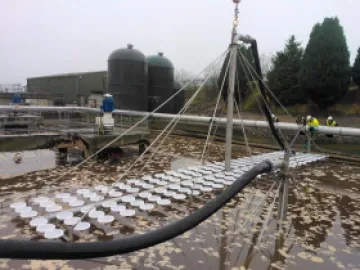
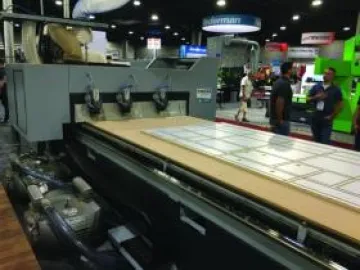
The IWF 2022 International Woodworking Fair was held August 23-26 at the Georgia World Congress Center in Atlanta, Georgia. This was the first global woodworking fair since 2018. The Show attracted announced the attendance of thousands of verified buyers of woodworking equipment. IWF is the largest woodworking technology trade show in North America and is held every other year at the Georgia World Congress Center in Atlanta, GA. It is ranked among the largest trade shows in the world.

Food

Wastewater

Containers

Conveying

Woodworking

Biogas

Energy