Protecting Your Equipment, Protecting your Environment
By Clint Browning, Solberg Manufacturing
[ Read Full Story ]
Industrial Utility Efficiency

By Jamie Stebbins, Solberg Manufacturing
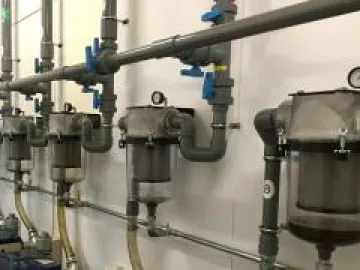
In this article, we will isolate and review one system common to many plants and industries: the vacuum system. Within this system, we will further drill down to the filtration required to maintain a healthy process, which contributes directly to the bottom line. The vacuum system does not exist in many production process lines without filtration. Throughput and quality of the end product are closely tied to the necessary vacuum levels achieved when filtration is properly deployed.
By Clint Browning, Solberg Manufacturing
By Dennis Seibert, Head of Business Development Leak Detection and by Philippe Bunod, Product Manager Integrity Solutions, Pfeiffer Vacuum
Blower & Vacuum Best Practices® Magazine interviewed Tyler Currie, Vice President Business Development, Van Air Systems and Van Gas Technologies.
Triethylene glycol (TEG) dehydrators are the most prevalent technology for removing water vapor from natural gas . Molecular sieve dryers are also quite common in gas processing plants. Molecular sieve units have operating processes similar to industrial heat-regenerated compressed air dryers. Natural gas, however, often needs to be purified at the wellhead before reaching the processing plant. Deliquescent dehydrators are normally used, in remote locations where no power supply exists, to dry small gas volumes located between the wellhead and these main treatment plants. The most common applications are instrument gas, fuel gas, sales gas, and emissions mitigation.By Richard Stukey
By Dan Bott