Industrial Utility Efficiency

Industries

Vacuum and protective gas both reduce the activity of oxygen-dependent microorganisms inside the packaging. This way, vacuum-packaged foodstuffs have a longer shelf life, even without preservatives. There are different types of vacuum packaging. When it comes to cheese, the type of vacuum packaging depends heavily on the specific type of cheese.

The ROI of Proper Filtration

This article examines how industrial facilities can quantify the return on investment associated with disciplined filter change scheduling. By connecting pressure drop, energy consumption, maintenance costs and equipment longevity, facilities can move from reactive maintenance to measurable operational control.

East Peoria WWTP Modernizes Aeration System

In 2019, the City of East Peoria, IL, began a comprehensive modernization of its wastewater infrastructure, including a $68 million upgrade covering two operating facilities, Wastewater Treatment Plant No. 1 and Wastewater Treatment Plant No. 3. The project addressed aging equipment, regulatory pressure and the need for improved process control.

APG-Neuros Aeration Blowers Treat Industrial Wastewater

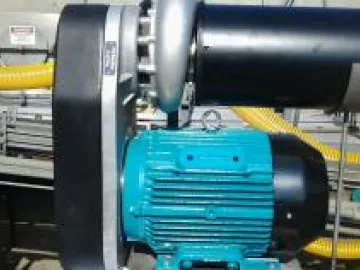
Different industries have differing levels of toxins and contaminants that need to be reduced before wastewater can be discharged. The company specializes in understanding those requirements and creating custom turbo blowers to customer specifications. Its leading industries are pulp and paper, poultry and food and beverage. 

Vacuum Generators and Pneumatics Power Robotics at Automate 2025

Automate 2025, showed attendees how to make their industrial plants more efficient with robotics. Throughout the conference, robotic arms shuttled packages, burgers and even macarons with speed and accuracy. Driving this new technology was a complex network of pneumatic cylinders and pick-and-place automation powered by pneumatic vacuum generation. Innovation makes these proven technologies more efficient than ever.

Advanced Aeration Control for Blowers

The ideal blower control matches the blower airflow to the process demand. The process demand, in turn, must be established by the aeration control system. This control strategy has become standard practice in most treatment facilities because of its proven effectiveness in reducing energy consumption and improving process stability.

Freeze Drying and the Sublimation of Ice Water

The phrase pairing the two words freeze and dry is one of the more straightforward and clear descriptions of a process in industry. To freeze dry a blueberry, an ice cream sandwich, the latest-greatest-pharmaceutical or a formaldehyde-infused complex carbon chain; one must first freeze the liquid water (or other liquid compound) into solid ice that is integrally bound within the food or other moist substance. 

VFDs Improve Multistage Blower Performance

Many designers and operators believe that multistage centrifugal blowers are not suitable for variable speed control. They also feel that multistage centrifugal blowers are an inefficient option for wastewater aeration. Implementing VFD control of their aeration blowers allowed the plant to improve energy efficiency. The reduction in energy expense paid for the system upgrade in less than two years.

PD Blower Package Reliability

High levels of reliability can be achieved in two ways. First, by design – employing quality materials, proven components, and simplified mechanisms. Second, by incorporating advanced monitoring techniques that identify abnormal operating conditions, provide notification to operators, and initiate equipment shutdown before catastrophic failure occurs. Modern positive displacement (PD) blower packages use both techniques to improve system reliability.

U.K. Wastewater Treatment Plant Blows Away Inefficiency

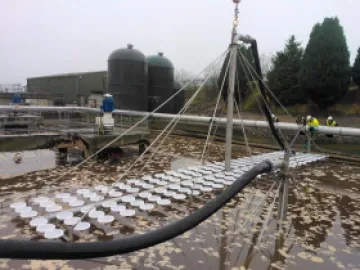
Derby Sewage Treatment Works handles wastewater for a population of 440,000, processing an average of 1’000 liters and a maximum 2,300 liters of effluent every second. After water has passed the inlet and mechanical screens, it gravitates into the primary settlement tanks, where solids settle as sludge at the bottom. The sludge is drawn off and anaerobically digested to produce renewable fuel, but liquid flows onto the activated sludge plant.

Overcoming Aeration Turndown Limitations with Compressed Gas Mixing

When a facility plans for a wastewater treatment plants, they typically design based on population and industry growth twenty to thirty years into the future. Regulatory requirements often dictate designing the activated sludge process equipment based on future-state influent flow and loading conditions, resulting in decades of constrained, inefficient, and suboptimal operation. 

Food

From managing complex wastewater streams to protecting stored grain and sustaining fish health,

Wastewater

In a strategic move to enhance environmental sustainability and operational efficiency, Universal

Containers

Many manufacturing processes are like offensive linemen. When everything is running smoothly,

Auto

The 2023 International Powder and Bulk Solids Conference and Exhibition took place April 25-27,

Plastics

Transit

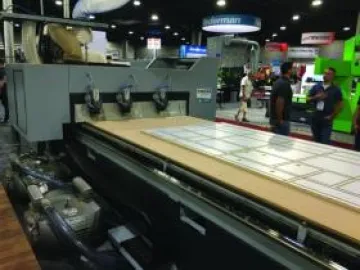
The IWF 2022 International Woodworking Fair was held August 23-26 at the Georgia World Congress

Pharmaceutical

Ever since it was commissioned in 1974, the Echallens wastewater treatment plant in the Swiss

Auto

The 2023 International Powder and Bulk Solids Conference and Exhibition took place April 25-27,

Energy

Blower & Vacuum Best Practices interviewed Mr. Sid Van der Meer and Mr. Terry Nickel from