To create the perfect vacuum filtration system it’s important to first understand the contaminants present, the maintenance required and the costs involved
Manufacturing plant operators oversee many systems and are tasked with continuous improvement projects to grow productivity and throughput. In this article, we will isolate and review one system common to many plants and industries: the vacuum system. Within this system, we will further drill down to the filtration required to maintain a healthy process, which contributes directly to the bottom line. The vacuum system does not exist in many production process lines without filtration. Throughput and quality of the end product are closely tied to the necessary vacuum levels achieved when filtration is properly deployed.
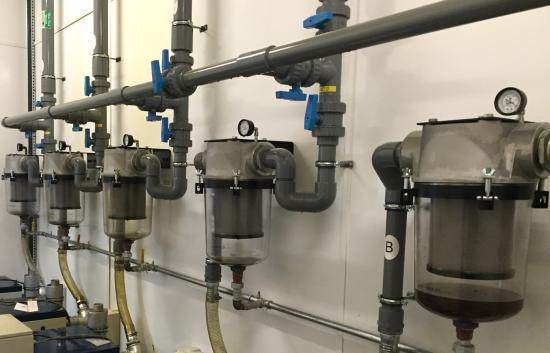
When removing liquids, drain configurations are an important design consideration for the filtration system.
Planning a Centralized Vacuum Filtration System
What is a centralized filtration system and what are some pros and cons? A centralized filtration system is typically found between multiple vacuum process lines and a centralized pump or group of pumps. This type of filtration must be engineered to mitigate challenge coming from multiple pieces of equipment. The challenge may be in the form of particulate, liquid, vapors or a combination. Complexity with a centralized filtration system is high due to the variability within each line. The filtration must be optimized to remove all forms of carryover from the process. Modularity may also be considered, allowing for forward engineering and greater flexibility with regards to current state and future state customization. The key to good filtration is leaving room for escalation should a process change or process line deliver more challenge over time (tolerances change). It is less expensive to build in capacity up front than to go back later to optimize an existing system.
Effective centralized filtration includes selecting filters appropriately sized for the amount of contaminants to be captured, while not impeding the flow or vacuum level required at the process. Designing a filtration system capable of handling multiple stages is effective where different filters target specific contaminants. An example would be a router table hold down application where heavy duty prefilters capture large particles, followed by pleated polyester filters removing finer particulate. Another example of multi-stage filtration would be a vessel designed to remove particulate, liquid and vapor all-in-one. This can be accomplished using a trap outfitted with a cooling function.
Contaminants from the process enter the chilled vessel. The process gas laden with particulate, liquid and vapor is directed through a torturous path in the form of a pleated fin pack. This fin pack is in direct contact with a cooling surface allowing the fin pack to act as the heat exchanger. Vapors are condensed and dropped out of the gas stream at the same time any particulate and liquid is dropped out. The gas stream is redirected through a polishing element to grab any potential residual contaminants prior to exiting the discharge of the filter vessel or trap.
Contaminant loads can vary widely between different process lines leading to design challenges when sizing centralized filtration systems. This is where a larger initial capital expenditure may be necessary to deliver the necessary filtration performance. Centralized filtration systems must also be able to tolerate fluctuations in flow rates from different process lines. Increasing vapor concentrations beyond the threshold of the thermal load a condensing trap is sized for may lead to bypass of contaminants. Again, forward engineering and understanding system design changes based on market conditions is critical. It’s not only critical at time of commissioning, but also for future state as changes are made to end products.
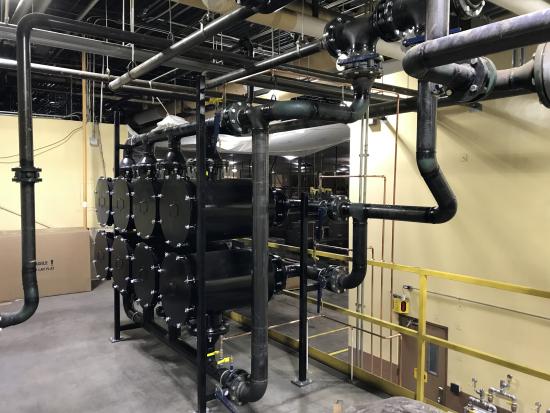
A centralized bank of particulate filters protecting a vacuum pump system.
When to Choose Point of Use Filtration
Would it be less complicated to decentralize the filtration and build a system closer to the process? This does reduce the complexity associated with knowing what process line is producing what contaminant that needs to be removed from the gas stream prior to the inlet of the vacuum pumps. A decentralized or point of use (POU) filtration system also serves to protect the plumbing between a tool, chamber, packaging equipment or any other equipment in a process where vacuum is applied. Depending on the facility and the length of lines between the process and the vacuum pumps, cleaning and keeping the lines free of contaminants that may choke or impede the conductance of a vacuum line can prove expensive. Vacuum pumps are carefully chosen based on the pumping curve and system performance required. This includes both the necessary vacuum level and flow required at the point of use or production end of the vacuum line.
Facilities with multiple laboratories are often ideal for POU filtration systems. These facilities are equipped with multiple vacuum line pickups. Each laboratory space may be pulling vacuum on unique processes that lead to facility vacuum line and header contamination. A POU filter takes the guess work out of designing a filter capable of handling not only various contaminants, but also the unknown challenge created when mixing contaminants. POU filtration in the laboratory environment allows for maintenance at the process level, reducing the impact on other pieces of equipment using the same vacuum source. POU systems are beneficial in reducing the complexity of maintenance and service efforts, as they isolate issues to specific points rather than affecting the entire system.
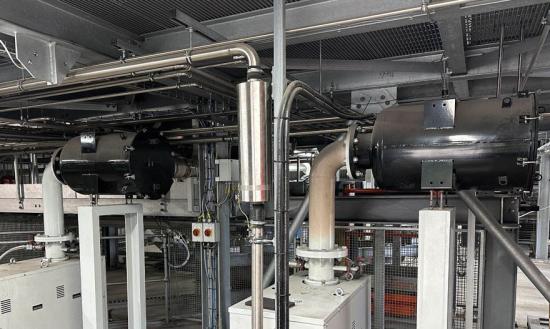
Point of use particulate filters protecting vacuum pumps.
Vacuum Filtration Questions to Ask
Which system is easier to service? With built in redundancy, either system can be serviced while avoiding disruption of vacuum at the process. Centralized filtration systems may allow for servicing to be accomplished in an equipment room and away from sensitive production areas. These areas may include clean rooms, rooms requiring washdown or clean in place (CIP) or any other hygienically sensitive area. This may come at the expense of not protecting the plumbing coming from multiple vacuum line pickups, feeding multiple headers that lead to the vacuum pumps. Plumbing acts as the arteries of the vacuum system. If these become clogged by particulates and liquids, it can negatively affect the performance of the pumping system. The cost associated with accessing and cleaning vacuum process lines can be expensive – especially for longer runs.
Does point of use filtration cost a lot more to deploy and maintain? While it may cost more to deploy multiple filtration units (one per process line), this cost may be offset by protecting lengthy runs of plumbing and multiple headers. Point of use filtration can also be optimized for the specific process line, minimizing the need to overengineer a centralized filtration system that needs to react to the variability of multiple lines and varying levels of challenge (particulate, liquids and/or vapors).
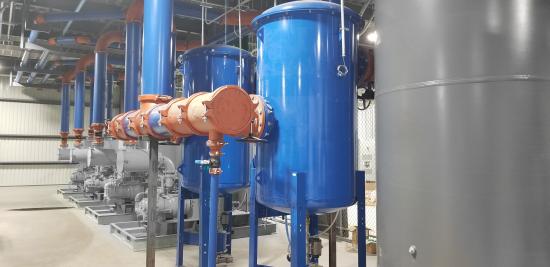
Two knockout tanks plumbed in parallel to protect a centralized bank of four vacuum pumps from ingesting liquids.
Finding a Vacuum Filtration Partner
Selecting filtration is like playing offense and defense at the same time. You deploy a defense capable of optimizing pump performance which provides the necessary vacuum level and flow needed at the process. At the same time, your offense is predicting disruptions that may be encountered through changes in process materials or constituents.
Forward engineering with experts that deploy systems around the world is your best offensive and defensive measure. Both centralized and decentralized filtration systems can be designed to manage challenges expected at the inlet to the vacuum pump or inlet to the plumbing network. Both systems also make it possible to apply the principles of continuous improvement. Process carry over in the form of contaminants may change as products are optimized for market needs or environmental considerations. Regulatory updates that seek to improve access to clean air and clean water also play a role. Filtration helps companies achieve goals in the form of reduced particle counts or parts per million (PPM) exhausted into the environment, reducing the need to clean water discharged from a plant.
When partnering with filtration solution providers that seek to innovate and discover new possibilities, both centralized and point of use vacuum filtration systems are capable of being designed with the future in mind. That means delivering solutions that exceed manufacturing plant expectations through continuous learning, listening and seeking to understand current state and future state of operations.
By removing contaminants from the process gas or air stream, filtration systems ensure vacuum pumps operate at optimal efficiency, reducing energy consumption and improving overall system performance. Optimized efficiency and performance also comes in the form of reduced downtime due to vacuum pump maintenance. Helping operators avoid unscheduled shutdowns is a high priority when designing a filtration system. Achieving a vacuum pump OEM’s regular maintenance intervals and planned number of pump operating hours between major overhauls is another goal of properly designed filtration solutions. Predictable maintenance and helping operators stay on track with their preventative maintenance schedules are additional metrics in tracking the effectiveness of a vacuum filtration solution.
Although the initial investment in a comprehensive filtration system might be significant, the return on that investment through improved product quality and increased operational throughput adds up quickly. On the other side of the balance sheet, innovative filtration solutions offer long-term savings through reduced maintenance, lower energy costs and improved equipment lifespan.
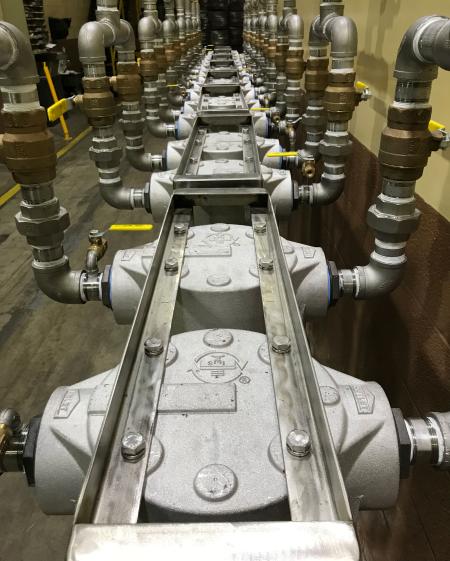
This inventory of duplex vacuum filters allows the user to maximize uptime and offers exceptional flexibility for a manufacturing process.
Images courtesy of Solberg Manufacturing.
|
About the Author Jamie Stebbins is a Vacuum Market Manager at Solberg Manufacturing. Stebbins’s previous roles with Solberg include Territory Manager, National Account Manager and U.S. Director of Sales. He works closely with OEMs to optimize filtration solutions in a diverse range of markets, seeking to improve process throughput and exceed operational expectations. |
 |
About Solberg Manufacturing
Solberg Manufacturing was incorporated in 1968. It partners with customers, colleagues and suppliers to help them innovate and discover new possibilities. The company credits its successes to a creative and dedicated team of professionals, quality products and, most of all, its customers. For more information, visit https://www.solbergmfg.com.
To read similar Vacuum System Filtration and Purification articles, visit https://www.blowervacuumbestpractices.com/technology/purification.
Visit our Webinar Archives to listen to expert presentations on Industrial Vacuum Technology at https://www.blowervacuumbestpractices.com/magazine/webinars.