Industrial Utility Efficiency

Food

From managing complex wastewater streams to protecting stored grain and sustaining fish health, effective airflow is essential to maintaining product quality and operational stability. How advances in blower technology, diffuser materials and automated controls are helping facilities improve efficiency, reduce energy use and meet increasingly strict environmental requirements.

The ROI of Proper Filtration

This article examines how industrial facilities can quantify the return on investment associated with disciplined filter change scheduling. By connecting pressure drop, energy consumption, maintenance costs and equipment longevity, facilities can move from reactive maintenance to measurable operational control.

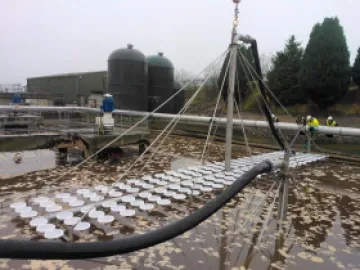
APG-Neuros Aeration Blowers Treat Industrial Wastewater

Different industries have differing levels of toxins and contaminants that need to be reduced before wastewater can be discharged. The company specializes in understanding those requirements and creating custom turbo blowers to customer specifications. Its leading industries are pulp and paper, poultry and food and beverage. 

Vacuum Generators and Pneumatics Power Robotics at Automate 2025

Automate 2025, showed attendees how to make their industrial plants more efficient with robotics. Throughout the conference, robotic arms shuttled packages, burgers and even macarons with speed and accuracy. Driving this new technology was a complex network of pneumatic cylinders and pick-and-place automation powered by pneumatic vacuum generation. Innovation makes these proven technologies more efficient than ever.

Freeze Drying and the Sublimation of Ice Water

The phrase pairing the two words freeze and dry is one of the more straightforward and clear descriptions of a process in industry. To freeze dry a blueberry, an ice cream sandwich, the latest-greatest-pharmaceutical or a formaldehyde-infused complex carbon chain; one must first freeze the liquid water (or other liquid compound) into solid ice that is integrally bound within the food or other moist substance. 

Hygienic Vacuum Packaging for Cheese

Vacuum and protective gas both reduce the activity of oxygen-dependent microorganisms inside the packaging. This way, vacuum-packaged foodstuffs have a longer shelf life, even without preservatives. There are different types of vacuum packaging. When it comes to cheese, the type of vacuum packaging depends heavily on the specific type of cheese.

Fresh Food and Clay Extrusion Vacuum System Case Studies

Vacuuming fresh food using chamber machines is often a daily activity in butcher shops, at fresh food counters for meat, sausage, and cheese products, as well as in the foodservice industry. All fresh foods contain more or less unbound water, which partially evaporates during vacuum packaging. This can influence the quality of the product. Furthermore, if the packaging machine is not permanently in operation, the packaging result may deteriorate, or the packaging process may take too long.

The 2022 International Production & Processing Expo

The 2022 International Production & Processing Expo (IPPE), was held January 25-27, 2022 in Atlanta with more than 500,000 square feet of exhibit space and 1,140-plus exhibitors. Attendee numbers had not been released when this was written. Sponsored by the U.S. Poultry & Egg Association, American Feed Industry Association and the North American Meat Institute, IPPE is the world's largest annual poultry, meat and animal food industry event of its kind. 

Two Vacuum System Optimization Case Studies from Europe

By using state-of-the-art vacuum technology for degassing mineral water, it has been possible to save an average of 3,000 cubic meters of water per filling plant per year. The solution was to replace the existing liquid ring vacuum pumps with MINK claw vacuum pumps from Busch Vacuum Solutions.

Tea Packaging Quality Improved with Vacuum Conveying Upgrades

In an ongoing project to improve processes whenever and wherever it can, a global manufacturer of private label retail, food service and specialty brand teas, purchased an extension conveyor system to improve efficiency and ergonomics. Prior to implementing the extension conveyor, a vacuum conveyor system transferred raw materials into portable silos that workers rolled from one production machine to the next.

Liquid Ring Vacuum Pumps and Food Applications

The food industries can have many messy processes, whether it is poultry evisceration, deboned waste conveying, bottling, or sugar cake filtration. Liquid ring vacuum pumps (LRVP’s) are often utilized as the backbone of these processes because they can handle the soft solids, debris, and particles that can easily get sucked into the vacuum pump. So how does a LRVP work, why does it work in these processes, and how to make sure they keep working?