Industrial Utility Efficiency

Rough Vac

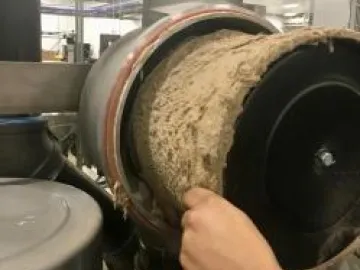
This article examines how industrial facilities can quantify the return on investment associated with disciplined filter change scheduling. By connecting pressure drop, energy consumption, maintenance costs and equipment longevity, facilities can move from reactive maintenance to measurable operational control.

Designing Vacuum Processes for Greater Efficiency

Efficient vacuum systems are built through thoughtful process design, not just equipment selection. This article outlines four critical strategies to improve performance and reduce operating costs: using multiple pumping stages to optimize efficiency across pressure ranges, managing vapor loads through pre-condensation, preventing performance losses from condensates and carryover and controlling operating temperatures. By addressing these factors early in the design phase, facilities can enhance productivity, lower energy consumption and ensure long-term reliability of vacuum processes.

GlobalVac & Air Upgrades the Dalton Cardiovascular Research Center

An aging 103 acfm oil-free rotary claw vacuum system was replaced with a skid-mounted duplex configuration featuring two 5.4 hp pumps, automated lead/lag controls and an inlet purge system to handle increased laboratory demand and prevent chemical contamination. The upgraded system delivers up to 106 acfm and 28”Hg, providing higher vacuum capacity, redundancy and improved operational stability within a constrained mechanical room footprint.

Best Practices 2025 EXPO & Conference Blower & Vacuum Show Report

The Best Practices 2025 EXPO & Conference contained plenty of sessions for industrial vacuum, blower and aeration blower professionals, including conference tracks, workshops devoted to pneumatic conveying and blower engineering and original equipment manufacturers on the EXPO floor. 

Industrial Vacuum System Basics

The objective of this article is to make vacuum systems a little less confusing by providing some foundational vacuum principles. Naturally, the best place to start is with an examination of air compressors! Air compressors take air from an open system (the atmosphere) and discharge it into a closed system, resulting in a higher pressure. The potential energy of high-pressure air is then used to serve an operational purpose.

7 Best Practices for Leak Detection in Vacuum Systems

Leaks in vacuum systems can cause considerable damage to sensitive industrial processes. The vacuum pump’s ability to generate and maintain the desired vacuum level is compromised as the process gas escapes the pump or contaminants – such as air, dust and debris – enter. This leads to accelerated wear and tear of internal components such as seals and gaskets, and the vacuum pump may fail or require more frequent servicing. As a result, energy bills and overall operating costs increase drastically, while output quality suffers. 

6 Maintenance Tips for Winterizing Your Vacuum Pumps

When cold weather approaches, safeguarding the performance and longevity of your vacuum pumps becomes a top priority. Cold conditions pose unique challenges that can affect the reliability and efficiency of these crucial industrial components. At Busch Vacuum Solutions, we understand the importance of winterization in preventing corrosion, freezing and other potential damage. In this guide, we’ll share tips to ensure your vacuum pumps continue to operate optimally during the colder months.

Vacuum Receivers: Full of Vacuum or Full of Myth?

In this article, we’ll discuss some of the uses for receiver tanks for positive pressure systems where the pressure inside the system is greater than atmospheric pressure, and the uses, or lack thereof of, receiver tanks in vacuum systems where the system pressure is less than atmospheric pressure.

When to Repair vs. Replace Your Vacuum Pump: A Guide

If your vacuum pump is malfunctioning, you are faced with a choice: repair or replacement. Our guide will take you through both options and provide recommendations on when it makes sense to repair vacuum pumps and when to replace them. We will also take a look at how to spot and diagnose common issues before they lead to system failure.
Whatever the path of action, the decision to repair or replace always begins with testing and diagnosis. A factory-trained service technician who specializes in vacuum pump services inspects the equipment and identifies the problem.

Advanced Vacuum Generation Reduces Maintenance

Industrial ceramics have been produced in Hermsdorf, near Jena, since 1890. In the past, high-voltage insulators; now, ceramic honeycomb bodies for heat exchangers, ventilation and emission control systems. They have always kept up with the times, developing innovative materials, products and state-of-the-art production processes to do so.

Vacuum Fundamentals: Process Applications and Oil-Free Technology

Manufacturing has two major categories of industrial vacuum applications, utility and process vacuum. Utility applications are all about utilizing the differential pressure between the inside of the vacuum system and the higher positive pressure of the atmosphere around us to perform a work-based-task in the physical world.